
I Didn’t Know
by Karen Joy
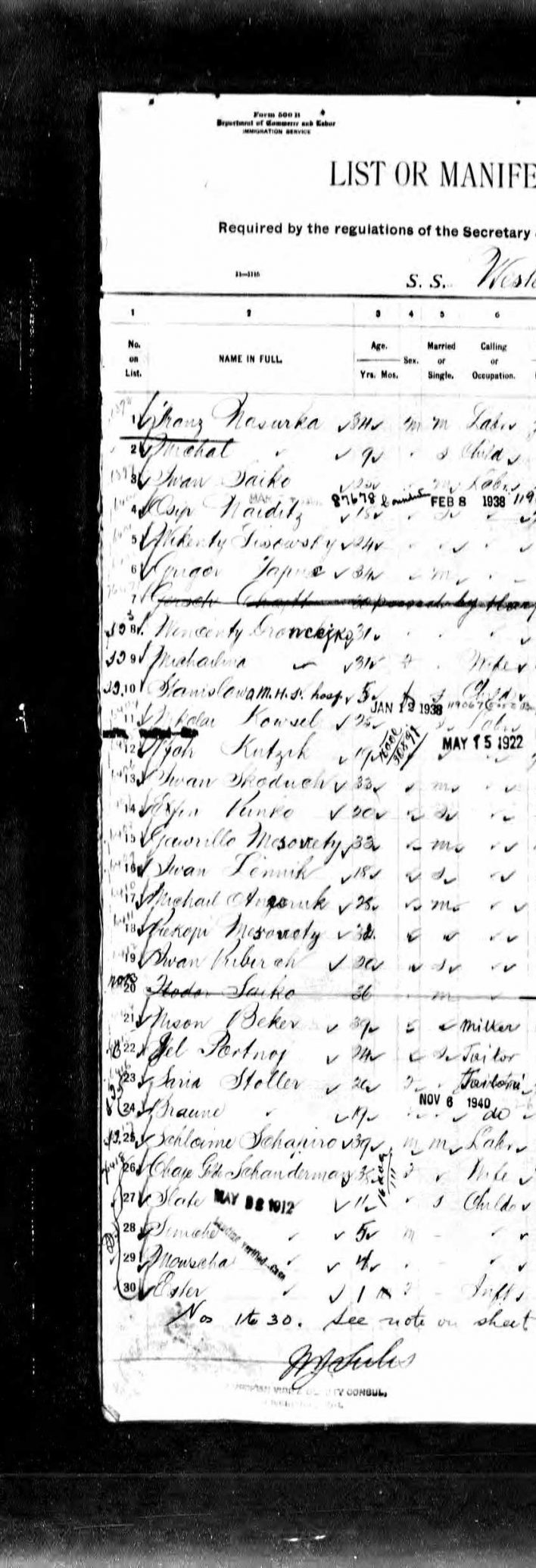
Building my family tree, I found stories. Through ship logs, declarations, naturalization forms, and census records, are stories. Even death certificates tell of last place lived, how died, fast or slow, family who signed, place of burial. The progression of census data tells me who lived near, moved in and out, sometimes even children lost. It allows me to see blocks of neighborhoods, watch young-ones grow and marry another, one street over. I can imagine these people playing together, sharing Shabbat, welcoming the new arrivals off the ships.
Then newspaper articles flesh the stories out more—from birth through school and military and weddings to deaths. Clothes are described, attendees, sometimes the weather. I can hear the ruffles and chatter and music.
Sometimes a father came to the continent, housed with a cousin, then mother and children came some years later. The census calls him a peddler, of dry goods, and labels him Hebrew or Yiddish or Jewish—depends on the year, the state, the census taker—though his naturalization records have him renounce the Czar of Russia. At times it is the eldest daughter, 17, unmarried, that preceded the family. I find her listed as a “servant” or “lodger” in someone’s home. Usually the rest of her family follow, or some do.
Then there are the branches of the tree that end abruptly—1943—parents and kids and grandkids. This is where I pause, every time, and take a deep breath.
I wrote the story of many in my head—so compassionate and understanding I thought, so sure somehow I could know what it was like to live in Europe in the late 1800s through that fateful 1943. So my story for why Mom and little siblings did not follow 17-year-old Rivke, or why Moishe was not joined by his brothers once established, was that they made different calculations. As is true for any of us watching storm clouds gather and the winds start to blow, hearing a rumble in the distance, some of us pack up our lawn chairs and move inside, while others wait it out, certain the clouds are blowing south and the sun is starting to peak through. They just saw it differently, I reasoned. Some won, some lost.
But I didn’t do the math. My direct ancestors came in a 30 year window, until 1920. Their siblings died in 1943. If I had done the math I would have thought to ask about the 23 years of no more gambling.
And why would I? A diligent student, I learned of the glory of America and her Allies coming to the rescue of Jews being slaughtered by one man, one army, from one country. The story was so neat and tidy, so right and wrong, so good versus bad.
I didn’t know. I didn’t know America started closing its borders decades earlier.
How many of my cousins might I have gotten to share this country with? As the descendent of those whose lives were not extinguished, my story is the opposite of the holocaust. Growing up in the country that, I was taught, fought for my people, it was easy to explain away the loss of whole family branches in a flash: my ancestors picked the right side of a 2-sided coin. Compassionate thinking, I thought. I didn’t know.
Now I want to know more of THEIR stories. I want to see the letters that flesh out aspirations and fears and beliefs and experiences. I want to know which, of those families I previously dismissed, tried to go somewhere and were denied. I want to know the fuller richer story of those people, my family.
I want to know.